


Resources
Home / Resources
Different programs, different needs
Taiji for Health
Taiji for Health offers new students a structured and approachable introduction to Chen Taijiquan. The program focuses on building balance, coordination, relaxed strength, body awareness, and confidence through Standing Meditation, Silk Reeling exercises, the 18 Essence Form, and simple partner practices.
The recommended readings and videos on this page are intended to support your in-person training, clarify key ideas, and help you develop a steady, thoughtful home practice.
Recomended Reading:
The Five Most Important Taiji Skills
Recomended Videos:
Chen Village Taijiquan
Chen Village Taijiquan builds upon the foundation developed in Taiji for Health. Students deepen their understanding of posture, movement, coordination, and internal mechanics through traditional Chen forms, Silk Reeling, partner training, Push Hands, and weapons practice.
The resources in this section support a more detailed study of the traditional curriculum and the martial principles that give Chen Taijiquan its distinctive character.
Recomended Reading:
Recomended Videos:
Taiji Meditation
Coming soon
ART Taiji Lexicon
A growing collection of the terms, concepts, titles, and phrases used within Ancient Root Taijiquan (ART). It gives students a shared language for understanding our practice, tradition, and community.
1. Foundations of Practice - Core ideas students encounter early
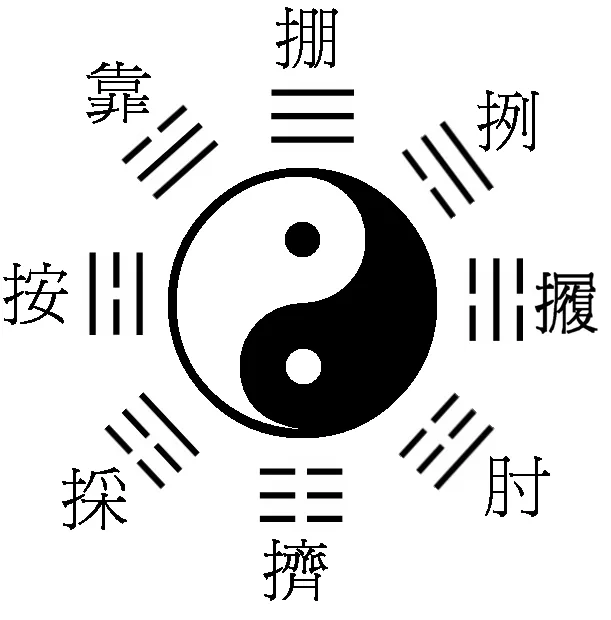
Taiji / Taijiquan
Chinese: 太极 / 太极拳
Pinyin: Tàijí / Tàijíquán
Common spelling: Tai Chi / Tai Chi Chuan
Taiji refers to the principle of complementary forces—such as stillness and movement, softness and firmness, or opening and closing—working together as parts of a unified whole.
Taijiquan means “Taiji boxing” or “Taiji martial art.” It is a traditional Chinese martial art that develops coordinated movement, balance, awareness, internal strength, and martial skill.
In our practice:
We often use Taiji as a shortened name for the art, while Taijiquan more clearly acknowledges its martial foundation.
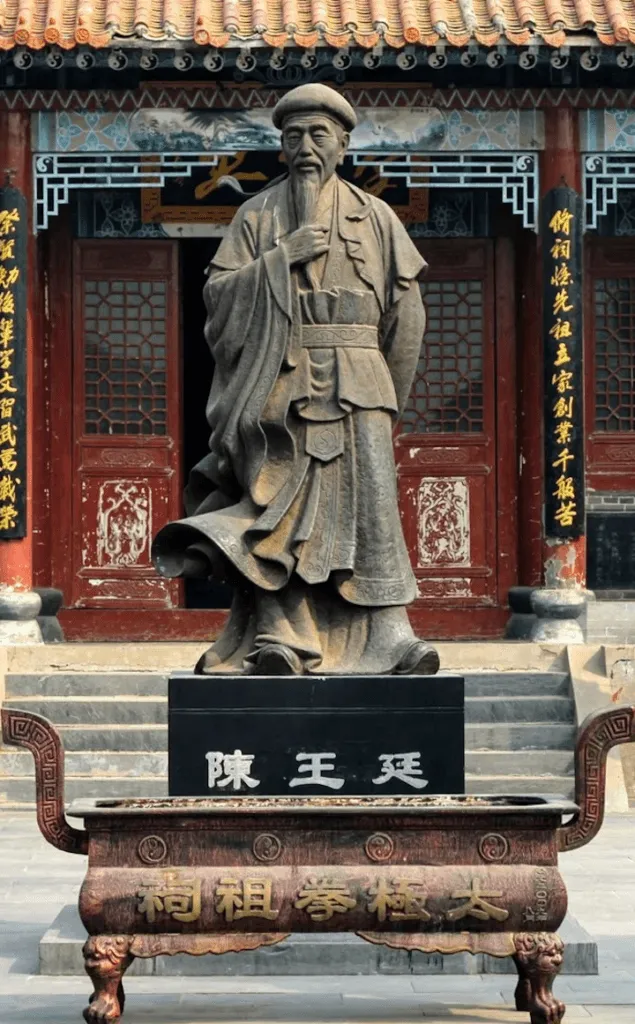
Chen Taijiquan
Chinese: 陈氏太极拳
Pinyin: Chénshì Tàijíquán
Common spelling: Chen Style Tai Chi Chuan
Chen Taijiquan is a traditional system of Taijiquan associated with the Chen family and Chen Village in Henan Province, China. It is known for its use of spiraling movement, changing rhythms, coordinated whole-body power, rooted movement, and a balance of softness and firmness.
In our practice:
Chen Taijiquan is the foundation of the curriculum taught at Ancient Root Taijiquan. Our training includes standing practice, silk reeling, forms, push hands, and traditional weapons.
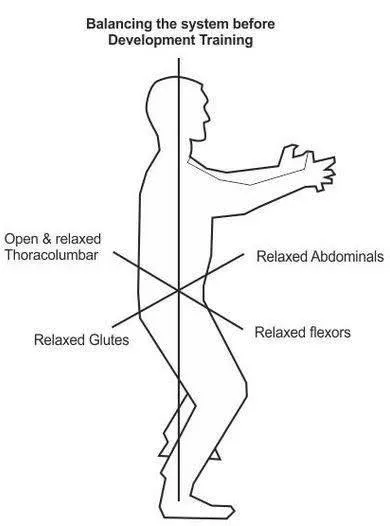
Standing Meditation
Chinese: 站桩
Pinyin: Zhàn Zhuāng
Common translation: Standing Like a Post
Standing Meditation is a foundational practice in which the body is held in a stable, upright posture while unnecessary tension is gradually released. It develops alignment, balance, awareness, rooting, and whole-body connection.
In our practice:
We use Standing Meditation to develop stillness, structure, relaxation, and the internal qualities that support all other Taiji training.
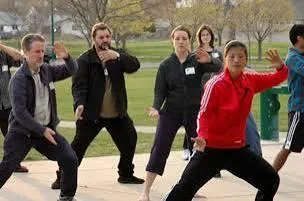
Silk Reeling
Chinese: 缠丝功
Pinyin: Chán Sī Gōng
Common translation: Silk-Reeling Practice
Silk Reeling refers to the continuous spiraling and circular movement characteristic of Chen Taijiquan. The name suggests drawing silk from a cocoon: the movement should be smooth, connected, and unbroken, without becoming stiff or slack.
In our practice:
We use Silk Reeling exercises to develop coordinated whole-body movement, spiraling power, joint mobility, and clearer connections between the center and the limbs.
Form
Chinese: 套路
Pinyin: Tàolù
Common meaning: A structured sequence of movements
A form is a set sequence of postures, transitions, and martial techniques practiced as a continuous whole. Forms preserve the movement principles, strategies, and training methods of a martial tradition.
In our practice:
We study forms not simply as movements to memorize, but as a way to develop structure, coordination, timing, intention, and the principles of Chen Taijiquan.
Internal Kung Fu
Chinese: 内家拳
Pinyin: Nèi Jiā Quán
Common translation: Internal Martial Arts / Internal School Boxing
Internal Kung Fu refers to Chinese martial arts traditionally classified as emphasizing internal development, coordinated whole-body movement, sensitivity, intention, structural alignment, and the efficient generation of power.
The term does not mean that internal styles avoid physical conditioning, strength, speed, or martial application. Rather, their training often gives particular attention to how the body is organized from within: releasing unnecessary tension, connecting the limbs through the center, coordinating movement with intention, and using structure rather than isolated muscular effort.
Taijiquan, Xingyiquan, and Baguazhang are commonly identified as the three principal internal martial arts. Each expresses internal principles differently, and each also includes demanding physical and martial training.
In our practice:
We describe Chen Taijiquan as an internal martial art because it develops Fang Song, Peng, rooting, spiraling power, sensitivity, intention, and coordinated whole-body movement. These qualities are trained through standing, Silk Reeling, forms, partner exercises, and martial applications.
External Kung Fu
Chinese: 外家拳
Pinyin: Wài Jiā Quán
Common translation: External Martial Arts / External School Boxing
External Kung Fu refers to Chinese martial arts traditionally classified as placing greater initial emphasis on visible physical skills such as strength, speed, flexibility, endurance, athletic movement, conditioning, and clearly expressed martial techniques.
The term does not mean that external styles lack internal development. Many external systems include Qigong, meditation, breath training, structural refinement, sensitivity, and sophisticated methods of generating whole-body power. In some traditions, students begin with more visibly physical training and gradually develop subtler internal qualities.
Shaolin-associated systems and many northern and southern Chinese martial arts are commonly described as external styles, although the methods and priorities of individual schools vary greatly.
In our practice:
We use the term External Kung Fu as a broad historical classification, not as a judgment of quality or depth. Internal and external training should not be viewed as opposites: a complete martial artist develops both internal organization and external capability.
2. Internal Principles
Fang Song
Chinese: 放松
Pinyin: Fàng Sōng
Common translation: Release tension / Relax
Fang Song is the intentional release of unnecessary muscular tension while maintaining structure, awareness, and connection. It does not mean becoming limp, collapsing, or giving up support. Instead, the body remains organized and responsive while excess effort is gradually reduced.
In Taijiquan, relaxation is not merely a passive state. It allows the joints to open, the breath to settle, and force to move more freely through the body. As tension decreases, movement can become more coordinated, sensitive, and efficient.
In our practice:
We use Fang Song to help students distinguish useful support from unnecessary tension. The goal is to remain rooted, expanded, and connected while moving with less strain.
Peng
Chinese: 掤
Pinyin: Péng
Common translation: Ward-off energy / Expansive support
Peng is a resilient, outwardly expanding quality that supports the body in every direction. It is often compared to an inflated ball: soft enough to yield under pressure, yet full enough to maintain its shape and return force.
Peng is also the first of the traditional Eight Energies of Taijiquan. Although it appears clearly in the posture commonly called Ward Off, its underlying quality should be present throughout the entire form. It helps prevent the body from collapsing, becoming disconnected, or relying on rigid muscular strength.
In our practice:
We develop Peng by maintaining rounded structure, whole-body connection, and gentle expansion. Students learn to preserve this supported quality through each posture and through the transitions between them.
Ding Jin
Chinese: 顶劲
Pinyin: Dǐng Jìn
Common translation: Upward energy / Crown lifting
Ding Jin describes a subtle upward quality through the crown of the head. The head is held as though it were gently suspended from above, allowing the neck and spine to lengthen without stiffness.
This principle is closely associated with the classical phrase Xū Líng Dǐng Jìn—often understood as lightly and naturally lifting the crown. The upward quality of Ding Jin works together with sinking through the lower body, creating length, balance, and vertical alignment.
Ding Jin should not be produced by raising the chin, tightening the neck, or forcing the head upward. It is a light, attentive quality rather than a muscular action.
In our practice:
We use Ding Jin to organize the head and spine, create space through the upper body, and balance the downward quality of rooting and sinking.
Chen
Chinese: 沉
Pinyin: Chén
Common translation: Sink / Sinking
Chen refers to the quality of sinking weight, tension, and intention downward. It allows the body to settle through the joints and connect more fully with the ground.
Sinking does not mean crouching, pressing downward, or allowing the posture to collapse. The upper body remains upright and expanded while the hips, knees, ankles, and feet receive the weight. Chen is often developed alongside Fang Song: as unnecessary tension is released, the body can naturally settle.
The downward quality of Chen is balanced by the upward quality of Ding Jin. Together, they create vertical expansion and stability through the body.
In our practice:
We use Chen to develop rooting, stability, and a clearer connection to the ground. Students learn to let the weight settle while preserving Peng and an upright structure.
Chan Si Jin
Chinese: 缠丝劲
Pinyin: Chán Sī Jìn
Common translation: Silk-reeling energy / Silk-reeling power
Chan Si Jin is the connected spiraling power characteristic of Chen Taijiquan. It describes how force is generated and transmitted through coordinated rotations, circles, and spirals involving the entire body.
The term draws on the image of drawing silk from a cocoon. The movement must be continuous and carefully regulated: pulling too sharply may break the thread, while becoming too slack may cause it to lose connection. In the same way, Chan Si Jin requires movement that is smooth, connected, responsive, and unbroken.
Chan Si Jin is more than simply moving the arms in circles. The spiraling action is coordinated through the feet, legs, waist, torso, and hands. As the body opens, closes, shifts, and turns, the movement remains connected through the center.
In our practice:
We develop Chan Si Jin through Standing Meditation, Silk Reeling exercises, form practice, and partner work. The goal is to integrate spiraling movement with rooting, Peng, Fang Song, and whole-body connection.
3. Training Methods
Zhan Zhuang
Chinese: 站桩
Pinyin: Zhàn Zhuāng
Common translation: Standing Like a Post / Standing Practice
Zhan Zhuang is a method of standing in a stable posture for an extended period while developing alignment, awareness, relaxation, and whole-body connection. Although the body may appear still, the practice involves continuous attention to posture, balance, breath, tension, and internal organization.
The term is sometimes translated as “standing like a post,” but this does not imply rigidity. The body should remain upright, rooted, expanded, and responsive. Over time, Zhan Zhuang helps students recognize unnecessary tension and develop strength without relying on stiffness.
In our practice:
We use Zhan Zhuang as a foundational method for developing Fang Song, Peng, rooting, Ding Jin, body awareness, and the connected structure needed throughout Taijiquan.
Silk Reeling
Chinese: 缠丝功
Pinyin: Chán Sī Gōng
Common translation: Silk-Reeling Practice
Silk Reeling is a training method used to develop the continuous spiraling movement characteristic of Chen Taijiquan. The exercises coordinate shifting, turning, opening, closing, and rotation through the entire body.
The name refers to drawing silk from a cocoon. The thread must be drawn smoothly and continuously: pulling too sharply may break it, while becoming too slack may cause the connection to be lost. In the same way, Silk Reeling movements should remain smooth, connected, and unbroken.
Silk Reeling exercises may be practiced with one hand, both hands, stationary footwork, or stepping patterns. Although the exercises may initially appear simple, they contain many of the fundamental movement principles found within the forms.
In our practice:
We use Silk Reeling to develop coordination between the center and the limbs, improve joint mobility, maintain Peng, and gradually understand Chan Si Jin.
Forms
Chinese: 套路
Pinyin: Tàolù
Common meaning: Structured movement sequences
Forms are established sequences of postures, transitions, martial techniques, and movement principles practiced as a continuous whole. They preserve the methods and strategies of a martial tradition while providing a structured way to develop coordination, balance, timing, strength, and awareness.
Learning a form begins with remembering the basic sequence, but memorization is only the first stage. As practice deepens, students explore alignment, weight transfer, spiraling movement, intention, martial applications, and the connections between each posture.
The transitions within a form are as important as the named postures. The form should eventually become a continuous expression of Taiji principles rather than a collection of separate movements.
In our practice:
We use Forms to integrate the qualities developed through Standing Meditation, Silk Reeling, and individual drills. Students learn both the movements and the principles that connect them.
Push Hands
Chinese: 推手
Pinyin: Tuī Shǒu
Common translation: Pushing Hands
Push Hands is a partner-training method used to develop sensitivity, balance, timing, structure, and the ability to respond to another person’s movement. Partners maintain physical contact while practicing patterns of yielding, redirecting, neutralizing, and issuing force.
Push Hands is not simply a contest of strength or an attempt to push the other person away. Its deeper purpose is to reveal tension, imbalance, disconnection, and unnecessary resistance. Through careful practice, students learn to remain stable while adapting to changing pressure.
Push Hands may begin with cooperative fixed patterns and gradually progress toward freer and more spontaneous exchanges.
In our practice:
We use Push Hands to test whether the principles developed in solo practice can be maintained while interacting with another person. The emphasis is on listening, connection, control, and mutual learning.
Partner Drills
Chinese: 对练
Pinyin: Duì Liàn
Common translation: Paired Practice
Partner drills are structured exercises practiced with another person to develop specific skills. These may include sensitivity, distance, timing, balance, coordination, applications, footwork, receiving force, or issuing force.
Unlike solo practice, partner work provides immediate feedback. A partner can reveal whether a student is using too much tension, losing structure, leaning, disconnecting the arms from the body, or failing to adapt to changing pressure.
Partner drills are usually cooperative, particularly when first introduced. Both students share responsibility for creating a safe and productive learning experience.
In our practice:
We use Partner Drills to explore Taiji principles in relationship with another person. The goal is not to defeat a partner, but to help one another understand structure, movement, and appropriate response.
Qigong
Chinese: 气功
Pinyin: Qì Gōng
Common translation: Energy Cultivation / Breath and Skill Practice
Qigong is a broad term for practices that cultivate the body, breath, attention, and internal vitality. These methods may include standing, moving exercises, breathing practices, visualization, self-massage, and meditation.
The word Qi may be understood in several ways, including breath, vitality, functional energy, or the living processes of the body. Gong refers to skill developed through steady and dedicated practice.
Qigong methods vary widely. Some are primarily intended to support health and relaxation, while others are used for martial development, meditation, rehabilitation, or spiritual cultivation.
In our practice:
We use Qigong to develop relaxation, breath awareness, coordination, balance, and a deeper sensitivity to internal movement. These practices may support Taijiquan training or be practiced as complete methods in their own right.
Neigong
Chinese: 内功
Pinyin: Nèi Gōng
Common translation: Internal Skill / Internal Training
Neigong refers to training methods that develop the internal organization and function of the body. While Qigong is often associated with health, breath, and energy cultivation, Neigong generally places greater emphasis on transforming structure, coordination, pressure, connection, and the way force is produced and transmitted.
Neigong is not a single exercise or system. It is a broad category that may include standing practices, breathing methods, movement drills, mental training, and specific methods for conditioning the body from within.
The distinction between Qigong and Neigong is not always absolute. A single practice may contain elements of both, depending on how it is performed and what qualities are being developed.
In our practice:
We use the term Neigong for practices intended to change how the body organizes, connects, and generates movement. Standing Meditation, Silk Reeling, and form training may all contain Neigong when practiced with this deeper purpose.
Meditation
Common meaning: Contemplative or awareness practice
Meditation is the practice of cultivating sustained attention, awareness, and mental stillness. It may be practiced while sitting, standing, walking, or moving through a Taiji form.
Meditation does not necessarily require the mind to become completely empty. Instead, the practitioner learns to notice thoughts, sensations, emotions, and distractions without immediately reacting to them. Attention can then return to the breath, body, posture, movement, or another chosen focus.
Within Taijiquan, meditative awareness helps unite the body and mind. It supports calmness, clarity, sensitivity, and the ability to remain present during both solo and partner practice.
In our practice:
We use Meditation to develop stillness, attention, breath awareness, and a more direct understanding of the body. Meditation may be practiced independently or integrated into Standing Meditation, Qigong, and forms.
Corrections
Common meaning: Adjustments and refinements
Corrections are specific adjustments offered by a teacher to help a student improve posture, movement, timing, structure, intention, or understanding. A correction may involve changing the position of a joint, adjusting weight distribution, releasing tension, clarifying a movement pathway, or refining the relationship between postures.
Corrections are not a sign of failure. They are a normal and essential part of traditional training. As students progress, the corrections often become increasingly subtle. A movement that is appropriate at one stage may later be refined as the student develops greater awareness and control.
A correction should help the student understand a principle rather than merely imitate an external shape.
In our practice:
We use Corrections to help students move beyond memorizing postures and begin embodying the principles within them. Particular attention is given to the transitions, or the space between the postures, where connection and continuity are often lost.
Ancient Root Taijiquan Privacy Policy


